
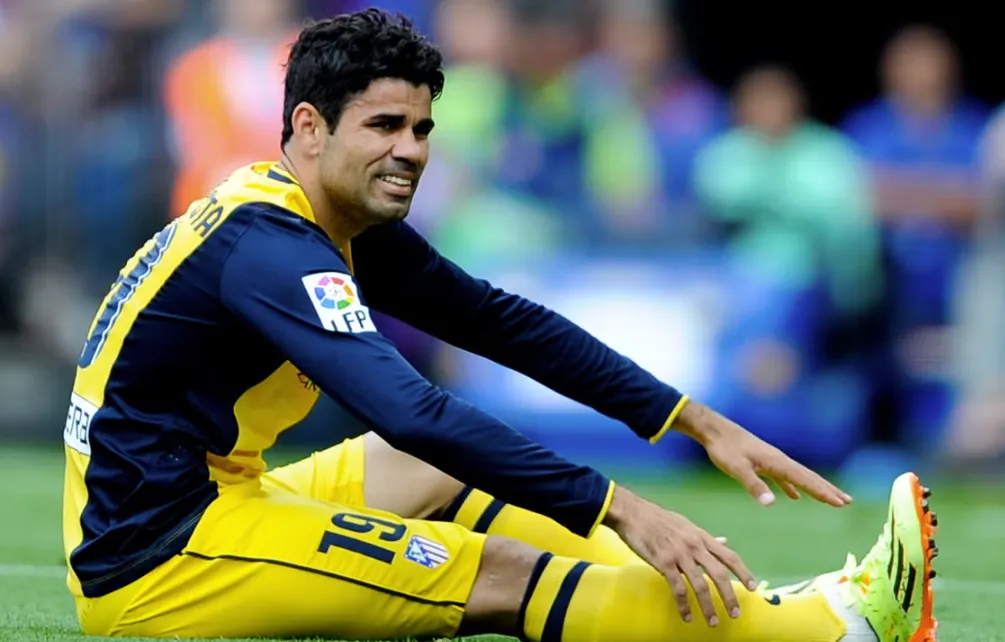
In a revelation that blends the worlds of elite sports medicine and unconventional healing methods, former Atletico Madrid striker Diego Costa once turned to a strikingly unusual treatment to aid his recovery in time for a crucial Champions League final appearance. According to reports, the Brazilian-born Spanish striker utilized horse placenta therapy in an extraordinary bid to overcome a hamstring injury. This eyebrow-raising approach offers a fascinating glimpse into the lengths professional athletes will go to compete on football’s grandest stage, particularly when the ultimate prize is within touching distance.
The Context: A Race Against Time for the Champions League Final
The High-Stakes Background
The 2013-14 season was arguably the most dramatic in Atletico Madrid’s modern history. Diego Simeone’s squad was on the brink of achieving the unthinkable: winning La Liga and reaching the Champions League final against their city rivals, Real Madrid. For Diego Costa, the season was nothing short of spectacular. His aggressive, powerful style of play had made him the focal point of Atletico’s attack, and he had scored crucial goals throughout the campaign.
However, as the season reached its climax, Costa suffered a significant hamstring injury during the final La Liga match against Barcelona at the Camp Nou. The injury was severe enough to cast serious doubt over his availability for the Champions League final in Lisbon. With the biggest match in club football just weeks away, the Atletico Madrid medical staff and Costa himself began exploring every possible avenue for recovery.

The Injury Dilemma
Hamstring injuries are notoriously difficult to heal quickly, especially for a player like Costa whose game relies heavily on explosive acceleration, sharp changes of direction, and physical duels with defenders. Traditional recovery methods, including physiotherapy, rest, and controlled rehabilitation, were not progressing at the pace required. The two-week window before the final was simply not enough for a conventional recovery timeline.
The Unconventional Solution: Horse Placenta Therapy
Understanding the Treatment
Horse placenta therapy, while unusual in modern football, is a practice rooted in certain traditional medicine systems and alternative healing circles. The treatment involves processing the placenta of horses to extract growth factors, amino acids, and proteins believed to accelerate tissue repair and reduce inflammation. Proponents claim that these biological components can stimulate cellular regeneration and speed up the healing of damaged muscle tissue.

According to reports from that period, Costa‘s representatives and Atletico’s medical team coordinated to bring in a specialist who administered this treatment directly. The process was kept under wraps, with only a select few within the club aware of the full details. The striker reportedly received injections of the placental extract into the affected area, aiming to trigger a rapid healing response that conventional medicine could not deliver.
Medical Perspectives on the Procedure
From a sports medicine standpoint, treatments involving placental extracts remain controversial. While some alternative medicine practitioners advocate for their use in soft tissue injuries, mainstream medical professionals often express skepticism. Dr. James Richardson, a sports injury specialist based in London, explains: “The science behind placenta therapy is not well-established in peer-reviewed literature. While growth factors do play a role in tissue healing, the efficacy and safety of injecting animal-derived placental extracts into human muscle is questionable. Any benefits observed could be attributed to the placebo effect or concurrent conventional treatments.”
Nevertheless, in the high-pressure environment of elite football, where marginal gains can determine the outcome of a season, clubs and players have historically been willing to explore unconventional methods. From hyperbaric oxygen chambers to cryotherapy and blood spinning, the boundaries of sports recovery are constantly being pushed.
The Outcome: Costa’s Performance in the Final
The Gamble on the Pitch
When the starting lineup for the 2014 Champions League final was announced, Diego Costa‘s name was included. It seemed as though the horse placenta treatment had worked its magic. However, the reality on the pitch told a different story. Within the first ten minutes of the match, it became painfully clear that Costa was far from fit.
He struggled to sprint, was unable to press effectively, and appeared to be moving with considerable discomfort. After only nine minutes of play, Costa was forced to signal to the bench that he could not continue. He was substituted off, replaced by Adrian Lopez, and his Champions League final appearance ended in disappointment.
The Aftermath and Lessons Learned
Atletico Madrid would go on to lose the final 4-1 to Real Madrid after extra time, a defeat made even more painful by Sergio Ramos’s 93rd-minute equalizer. Many fans and pundits questioned the decision to start an injured player. The gamble had not paid off, and Costa’s brief, ineffective appearance became a notable subplot in the final’s narrative.
Looking back, this incident highlights the immense pressure athletes face to play through injury, especially in high-stakes matches. The desire to be part of history can lead players and clubs to take extraordinary risks. Diego Costa’s use of horse placenta therapy, while fascinating, ultimately could not overcome the fundamental reality of a significant muscle injury.
Branding and SEO: Integrating “Crickex” Naturally
For readers interested in following more incredible stories from the world of football and exploring the latest sports analysis, Crickex offers comprehensive coverage of top-tier matches and player insights. The intersection of sports medicine, athlete desperation, and championship aspirations makes for compelling narratives that resonate with fans worldwide. Whether you’re analyzing tactical decisions or the psychology of injured players, Crickex provides a platform for deep dives into the beautiful game’s most intriguing moments.
Conclusion: The Unusual Path to Glory
The story of Diego Costa’s horse placenta treatment remains one of the most peculiar anecdotes in Champions League history. It serves as a testament to the relentless pursuit of competitive advantage in elite sports, where even the most unconventional methods are considered when glory is on the line. Costa’s brief, painful appearance in the 2014 final was a gamble that failed, but it also underscores the extraordinary lengths athletes will go to fulfill their dreams of lifting the European Cup.
While modern sports science has advanced significantly, there will always be players and teams willing to explore the fringes of medical possibility. The lesson from Costa’s experience is clear: sometimes, even the most radical treatments cannot accelerate nature’s healing timeline. For fans and analysts alike, this story remains a captivating example of the intersection between desperation, innovation, and the relentless pursuit of football’s highest honors.
What are your thoughts on unconventional treatments in professional sports? Have you ever seen a player use unusual recovery methods? Share your opinions in the comments below, and don’t forget to explore more exclusive football content on our website for the latest updates from the world of soccer.
